
Charting New Frontiers in Democracy: A Romani Voice in Parliament
Main Article Content
Article Sidebar
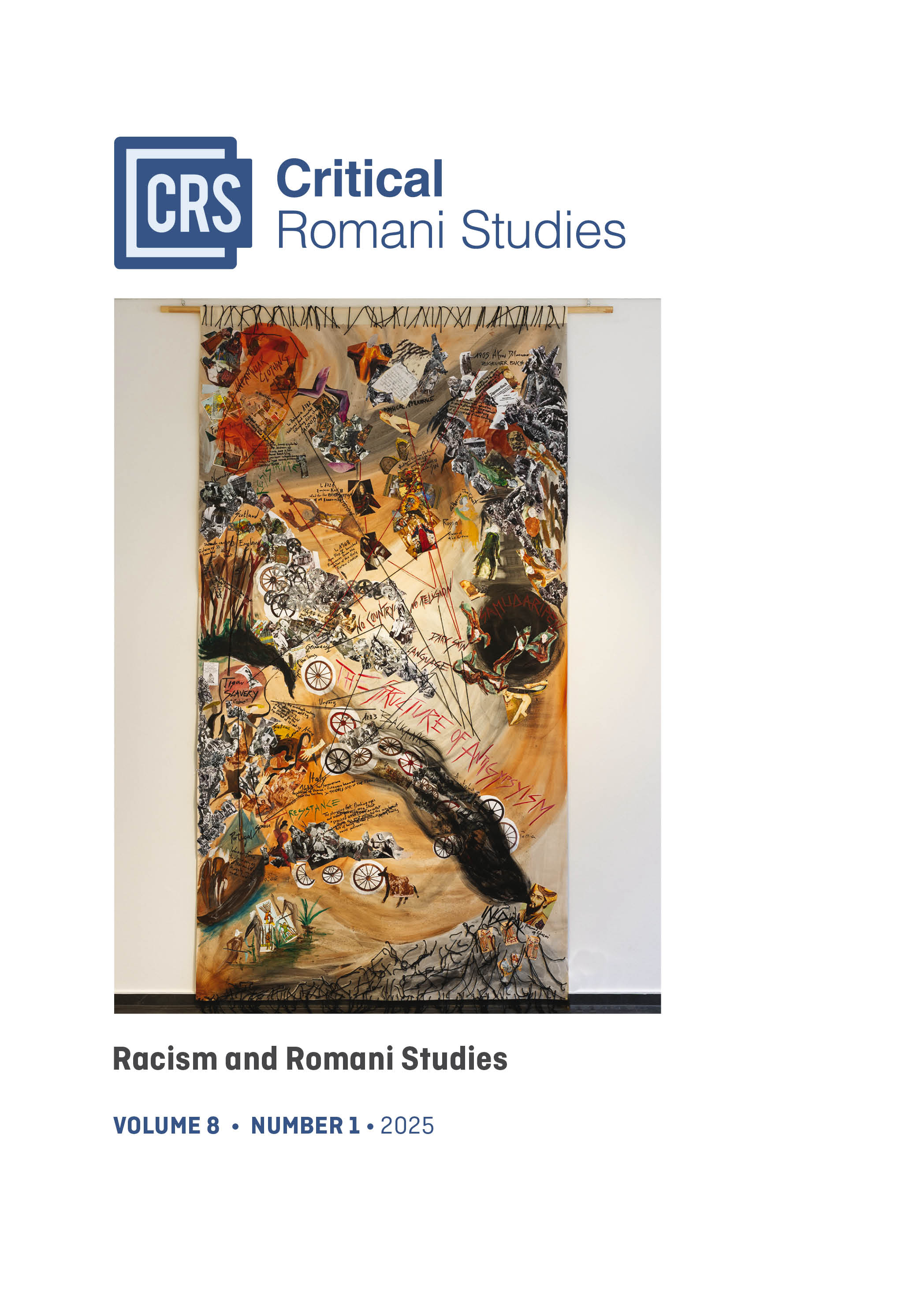
Published
Dec 11, 2025
Ismael Cortés Gómez
Carmen Cañete Quesada
Abstract
This interview features insights from Ismael Cortés, a scholar who spoke during the Florida Atlantic University (FAU) Summer Abroad Program in Spain, which Carmen Cañete has directed for a decade. In Madrid on 7 July 2022, Cortés delivered a lecture on the portrayal of criminalised Spanish Roma (Gitanos) in the “New Spanish Cinema” of the 1960s, focusing on Mario Camus’ Con el viento solano(1965).[1] The talk sparked discussions on ethnicity, identity, and marginalisation, and the original Spanish version of this exchange was published in O Tchatchipen, a journal from the Romani Institute for Social and Cultural Affairs (IRASC). IRASC, founded by Romani activist Juan de Dios Ramírez Heredia,[2] has long worked for Romani rights in Spain. Cortés returned on 22 July 2024, to discuss the Gitano subaltern figure in Cine Quinqui[3] and further addressed the CEU Romani Studies Program, EU elections, and his ongoing projects, culminating in this bilingual interview.
How to Cite
Cortés Gómez, I., & Cañete Quesada, C. (2025). Charting New Frontiers in Democracy: A Romani Voice in Parliament. Critical Romani Studies, 8(1), 266–273. https://doi.org/10.29098/crs.v8i1.217
Article Details
Section
Arts and culture

This work is licensed under a Creative Commons Attribution-NonCommercial 4.0 International License.
Authors who publish with this journal agree to the following terms:
- Authors retain copyright and grant the journal right of first publication. The work is licensed under a Creative Commons Attribution-NonCommercial License that allows others to share the work with an acknowledgement of the work's authorship and initial publication in this journal.
- Authors are able to enter into separate, additional contractual arrangements for the non-exclusive distribution of the journal's published version of the work (e.g., post it to an institutional repository or publish it in a book), with an acknowledgement of its initial publication in this journal.